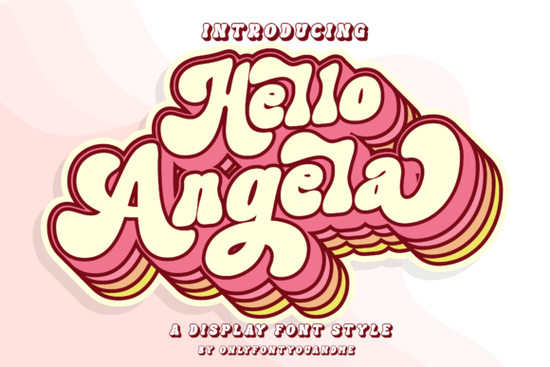
If you need a typeface that catches attention without feeling overly ornate, Hello Angela Font is exactly the tool you will reach for when designing covers, social graphics, or storefront signage. It belongs to the display typography category, meaning it carries heavy visual weight while keeping readability intact. Because it includes a full set of alternate characters and special shapes, you can adjust spacing and balance without relying on third-party plugins or complicated scripting.
What Makes This Typeface Work Well for Print and Digital Projects?
Display letters thrive because they solve a simple problem: most readers ignore text that blends into the background. Strong curves, generous counters, and careful contrast guide the eye directly to your message. Built-in swash variants and stylistic sets activate through standard design software menus. A quick search in your glyph viewer reveals dozens of options that keep your project looking custom rather than template-driven.
Crafters and small business owners often ask whether these shapes survive scaling down. They do, provided you avoid crushing the negative space between letters. Tight tracking usually muddies thick-stroked display fonts, so leaving breathing room around acronyms keeps everything sharp. When you export for laser cutting, vinyl wrapping, or sublimation prints, the vector paths remain clean across different sizes.
How Do You Actually Use These Glyphs Without Getting Stuck?
The technical side is straightforward. Since the file uses PUA encoding, every alternate shape lives inside a single font file. Your operating system and design programs recognize those code points automatically. In Illustrator, InDesign, or Canva, you highlight the target text, open the glyph panel, and pick the variant that fits your layout. The same approach works in Affinity Designer and CorelDRAW. Once you build a library of favorite replacements, you apply them quickly to recurring designs without resetting spacing.
If you sell handmade goods or run a print-on-demand shop, speed matters. Built-in alternates remove guesswork from quote cards, price tags, and packaging labels. Testing two or three style set combinations before committing to a final mockup cuts revision rounds and keeps your production pipeline moving forward.
Can You Pair It With Other Styles For Consistent Branding?
A striking headline usually needs a quiet companion. Slim geometric sans-serifs or low-contrast slab styles ground playful display letters and prevent chaotic compositions. Designers lean toward straightforward letterforms when building brand systems across multiple touchpoints. Swapping in a clean script or structured serif creates immediate hierarchy. If you want to experiment with complementary shapes that share similar proportions, you can explore Selina Daniel Duo for balanced contrasts, Have A Nice Day Honey for warm casual tones, Motcha for grounded editorial layouts, PreppyCrush for event branding, or Bloomsy for lifestyle collections. Mixing weights and x-heights intentionally keeps your palette cohesive.
Where Should You Start When Testing New Display Letters?
Begin with a small sample sheet. Set three short phrases at different sizes, swap default characters for preferred alternates, and review the output under normal lighting. Screens often hide alignment issues that become obvious once ink hits paper or vinyl meets plastic. If you want a reliable reference for measuring spacing and baseline behavior, check out resources like Hello Angela Font on Creative Fabrica to download the master files and follow official setup notes.
Quick Setup Checklist
- Install the font file through your system font folder and restart your applications
- Open the glyph panel and pin your top five alternates for rapid access
- Set tracking to zero for tight logos, then add positive tracking for readable headlines
- Export vector artwork at 300 DPI or higher before sending files to local printers
- Save a dedicated color and type style sheet so future projects stay consistent
Next Step: Pick one upcoming label or cover, apply two alternates from the style set menu, and compare the original against the revised version. You will quickly see which shape combination matches your audience expectations before investing time in mass production.
Download Now Design Your Website with Motcha Font Style
 Groovy Melt Font: Style Tips & Creative Ideas
 Retro Fonts for Modern Projects: Design and Use
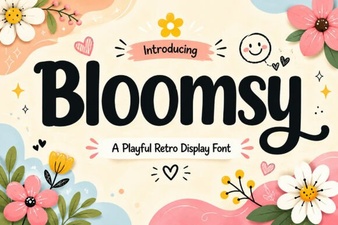 Bloomsy Font: Create Elegant Designs & Typography
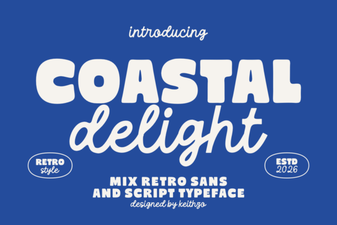 The Coastal Delight Font: a Design Guide
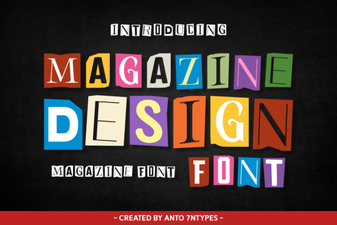 Best Fonts for Magazine Layout & Design