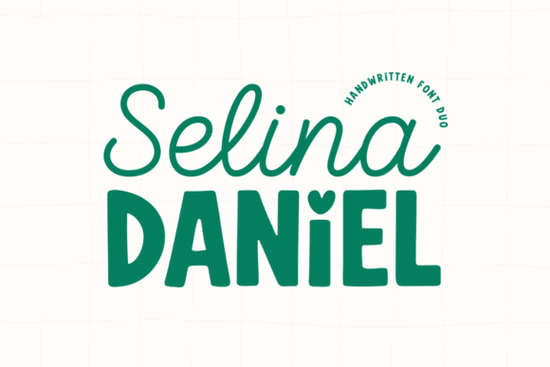
If you need a typeface that balances delicate elegance with bold readability, looking at the Selina Daniel Duo Font Font gives you exactly what modern projects require. This handwritten pair combines a light, romantic script with a thick, playful sans-serif into a single, cohesive toolkit. Instead of hunting for two separate fonts that rarely match well together, this duo delivers instant visual harmony out of the box. The script handles signatures and main headlines beautifully, while the complementary block letters ground your layout with clear supporting text. You get consistent spacing, matching stroke weights, and a PUA-encoded setup that lets you toggle between stylistic alternates with just a few clicks in your design software.
How do you build visual hierarchy without mixing too many typefaces?
Visual hierarchy often breaks when you combine random scripts and geometric fonts that clash on weight or mood. A matched pair solves this friction because both styles share the same underlying rhythm and hand-drawn character. The “Selina” script flows naturally across curves and slants, making it ideal for wedding stationery, boutique labels, or custom apparel where you want a personal touch. Meanwhile, the “Daniel” sans-serif carries the heavy lifting for subheadings, price tags, and instructional copy. Its chunky structure keeps text legible even at smaller sizes or when stamped onto fabric. When you pair them together, your designs gain immediate depth. Readers’ eyes naturally move from the sweeping headline down to the structured body text without feeling like they jumped between unrelated design worlds.
What kinds of projects work best with this kind of handwriting style?
This duo fits comfortably across several creative niches. Social media creators use it for quote cards, story templates, and engagement graphics where contrast stops the scroll. Craft sellers lean on it for digital downloads, sticker sheets, and planner covers that need a friendly but polished look. Small business owners applying it to packaging, tote bags, or embroidered patches will notice how the script adds warmth while the sans-serif keeps essential information readable. If you are working on branding materials, you can easily swap it out for something bolder later on, or complement it with a tight tracking font for navigation bars. Many designers also pair it with cleaner athletic lettering for sporty layouts, or explore retro gradient lettering when experimenting with nostalgic color palettes.
How does PUA encoding change your workflow?
Standard font files sometimes lock away their best features behind complicated substitution menus. PUA encoding removes that guesswork by mapping special characters and alternates to hidden code points. Once installed, open your font menu and select the styling panel. You will see extra flourishes, swashes, and alternative letterforms appear instantly when you click through the alternate glyphs. This means you spend less time adjusting kerning manually and more time laying out concepts. It also makes bulk editing easier when you need to switch a standard letter to a decorative version across multiple text boxes. The same principle applies if you decide to layer it with other specialty typefaces, such as classic academic lettering for university-themed merch or educational worksheet designs for parenting blogs.
Can you mix handwriting fonts with other display styles safely?
Mixing type families works when you respect proportion and baseline alignment. Since this pair already contains two distinct weights, adding a third font requires careful scaling. Keep the new element either much lighter or significantly heavier than your current layout. For example, you might add a compact geometric sans for contact details, or try a thick brush letterform for large background textures. Just remember to test your chosen combination on actual printed samples before committing to full runs. Digital mockups often hide poor contrast or awkward white space. If you ever need a contrasting set that leans into warm nostalgia, sweet greeting card lettering offers a similar cozy vibe without overwhelming your primary message. You can preview the full character set and stylistic alternates by checking out the Selina Daniel Duo library page before downloading.
- Check file compatibility: Verify that your design program supports OpenType and PUA glyphs before starting large projects.
- Test print resolution: Export your mockups at 300 DPI to catch blurry thin strokes or muddy ink spread.
- Limit alternating glyphs: Use one or two swash variations per layout to maintain readability and brand consistency.
- Adjust line height: Increase vertical spacing when stacking script over block letters to prevent overlapping descenders.
- Save master styles: Create a paragraph preset pairing the two weights so you can reuse the hierarchy quickly across future posts or product listings.
 Design Your Website with Motcha Font Style
 Hello Angela Font: Creative Projects & Design Tips
 Groovy Melt Font: Style Tips & Creative Ideas
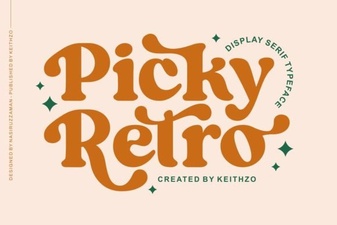 Retro Fonts for Modern Projects: Design and Use
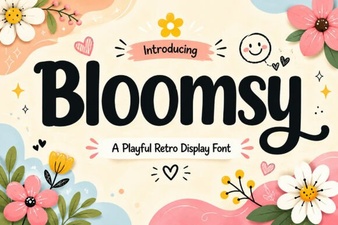 Bloomsy Font: Create Elegant Designs & Typography
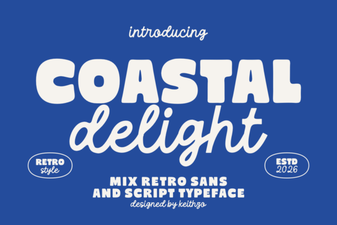 The Coastal Delight Font: a Design Guide