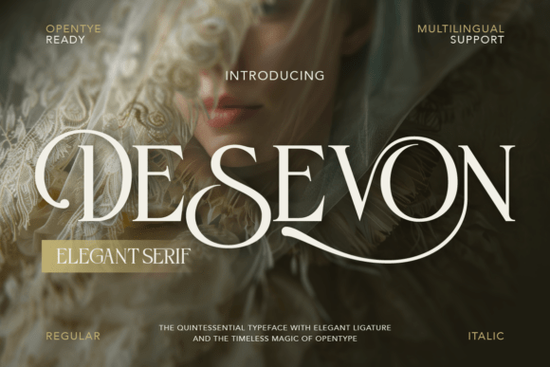
If you need a typeface that balances old-world charm with clean modern lines, Desevon Font is a reliable choice. This refined serif design works well across many projects, from delicate wedding stationery to bold product labels. Instead of chasing temporary trends, creators often prefer letters that feel polished and stable. The high-contrast strokes and graceful curves give your work an immediate sense of quality, while the included stylistic alternates and swashes let you tweak individual words without switching typefaces.
Why Do Designers Prefer High-Contrast Serifs?
High-contrast serifs draw the eye along the baseline, making headlines easy to scan while keeping a premium appearance. Small business owners who print custom packaging or digital storefronts benefit because this style reduces the need for heavy decorations. The shapes communicate elegance on their own. Default spacing leans slightly open, which prevents ink bleed on textured papers and keeps thin strokes visible on small screens.
How Do the Built-In Alternates Save Time?
Commercial packages often stop at basic characters, but this set includes a full character map and switchable alternate forms. Triggering certain stylistic options turns single letters into flowing swashes that connect smoothly to neighbors. Automatic ligatures tighten common letter pairs for cleaner reading. These features cut drafting hours and keep final files organized. When you need extra flexibility, pairing this style with other refined options in the curated serif collection helps build a complete commercial toolkit. You can explore the full download here: Desevon Font.
Which Industries Use This Typeface Most Effectively?
Crafters and print-on-demand sellers track how letterforms behave on different surfaces. Because Desevon relies on clear vector paths, it reproduces cleanly on matte paper, glossy stickers, embroidery transfers, and heat press vinyl. The italic version adds motion to pull quotes, menu headers, or skincare ingredient lists without feeling heavy. Here are the most common applications:
- Luxury brand identities requiring consistent markup across business cards and signage
- Editorial spreads where serif headlines carry the narrative voice
- Wedding suites and ceremony programs needing formal yet approachable spacing
- Bottled goods and cosmetic jars where shelf presence drives quick decisions
- Digital ads prioritizing mobile readability
Fewer font files mean less confusion inside your design software and faster exports when handing artwork to manufacturers. Mixing regular and italic weights creates subtle hierarchy without pulling in a second family.
Can You Trust the Kerning Across Different Sizes?
Tracking values matter when scaling artwork for social thumbnails or large banners. The default optical compensation keeps letters breathing evenly at both point sizes. If you need tighter compression for specific layouts, the alternates engine gives you safe adjustment points without breaking visual rhythm. Sometimes a different structural approach fits your brief better. When you need a softer transition between classic serifs and modern sans styles, exploring a companion piece like Montage rounds out your design options nicely.
What Should You Verify Before Finalizing Files?
Even solid typefaces produce unexpected results if embedded incorrectly or stretched too far. Run a quick proof check to ensure all alternates triggered correctly and no glyph substitution fell back to defaults. Test your color palette against light and dark backgrounds, since high-contrast serifs show minor shifts when inverted. Export vector copies alongside standard PDFs so printers retain editable text layers if needed.
Keeping a short reference sheet with your favorite ligature pairs, swash triggers, and recommended line heights cuts revision time significantly. This habit streamlines collaboration with freelancers and fulfillment centers alike.
Practical Checklist Before Production
Before moving forward, confirm these details:
- All alternate glyphs display correctly in your layout program
- A 300 DPI test print proves thin-stroke clarity on your chosen material
- Fonts are embedded or outlined per your printer’s guidelines
- Master files separate headlines, body text, and decorative swashes onto distinct layers
- Original OTF and TTF files are backed up with exported projects
Adjust line weight and spacing only after verifying baseline readability. Then let the built-in ligatures and alternates handle the finishing touches. Always verify how the text renders on actual devices before launching campaigns or shipping physical orders.
Try It Free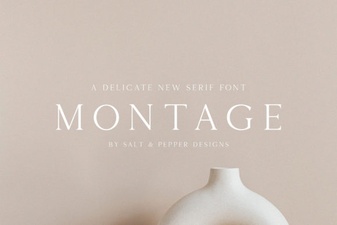 Montage Font: Design with Creative Typography
 Design Your Website with Motcha Font Style
 Modern Heritage Fonts for Creative Projects
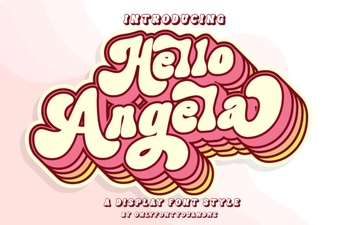 Hello Angela Font: Creative Projects & Design Tips
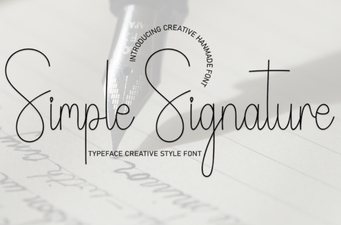 Clean & Creative Projects Using Simple Signature Fonts
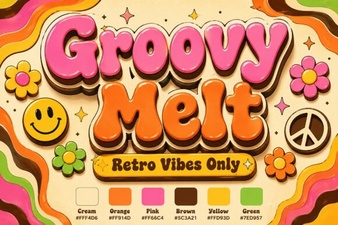 Groovy Melt Font: Style Tips & Creative Ideas